Profile
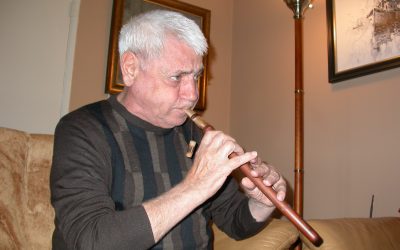
Djivan Gasparyan
Djivan Gasparyan (1928-2021) was an Armenian musician and composer based in Sherman Oaks, CA. He played the duduk, a double reed woodwind instrument related to the orchestral oboe. Born in Solak, Armenia to parents from Mush, Gasparyan started to play duduk when he was six. In 1948 he became a…
Profile
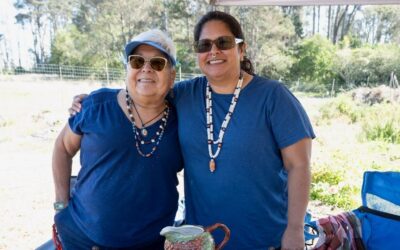
Julie Dick-Tex
Western Mono Basketry and Traditional Beading
Profile
Tacuma King
The West African Dunun and Djembe drumming tradition is an old performance art form of the Susu and Mandinka peoples of the region. Versions of these forms can be found throughout West African nations such as Mali, Guinea, Senegal, Gambia, and the Ivory Coast. Dunun, Sangbani, and the Kinkini are…
Profile
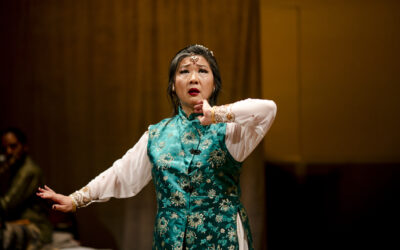
Seibi Lee
Kathak
Profile
Jeorgina Martínez
Food is always central to any gathering of significance, and the preparation of regional celebratory food for special occasions such as a wedding, a patron saint day, or other religious holidays, is assigned to those invested in keeping vibrant the regional flavors. In Juxtlahuaca district located within the Mixteca region…
Profile
Leslie McCovey
For Indian tribes of Northwestern California the art form of making female regalia, particularly ceremonial dresses was nearly lost. As native people fight against cultural erasure to retain their languages and cultural practices, the art form of regalia making, fortunately, has regained a high frequency of practice in the current…
Profile
Yagbe Onilu
The California East Bay has become a host for many incredible West African artists and cultural expressions. Drumming and dance Senegal and Guinea, for example, have captured the heart of many communities in this region. There are a variety of musical expressions, forms, and instruments that have been transplanted from…
Profile
Luis Morales Ortiz
In Mexico there exists an incredible diversity of dance traditions from the son jarocho from Veracruz, to the redovas of the northern states, to the jarana tradition in Yucatan, many of which are often included as part of the nation state identity and as part of the ballet folklorico presentations.
Profile
Swapan Chaudhuri
Tabla, North Indian percussion
Profile
Natividad González Morales
In the Northwestern area of the state of Michoacán resides an indigenous group known as the Tarascos, who are also referred to as Purépecha, pertaining to the language spoken by this group. The Purépecha people have been successful in retaining a variety of cultural expressions in addition to the language.