
Dr. Leticia Soto Flores, ACTA
October 30, 2025

Visite esta página en Español aquí.

On September 19, I had the honor of participating in the 5th International Congress on Violence in Migration, organized by the Secretaría de Desarrollo Institucional (Office for Institutional Development, UNAM), ENES Morelia UNAM, the Interdisciplinary Project for Social Interaction and University Extension, the Center for Iberian and Latin American Music, El Colegio de Michoacán, and the Centro Cultural Morelia UNAM. I am deeply grateful to Dr. Xóchitl Chávez, professor in the Department of Music at the University of California, Riverside, who invited me to participate in the panel she organized, dedicated to exploring migrant experiences through art and community-based practice.

My presentation, titled “We Are From Where Our Parents Are From: Migrant Polyphonies from California’s San Joaquin Valley,” was inspired by a phrase I heard during fieldwork in the Central Valley for ACTA’s Sounds of California project in the San Joaquin Valley: “We are from where our parents are from.” The words came from a Mixtec woman whose parents were born in Oaxaca, though she herself was born in Veracruz and now lives in Fresno.

In that phrase, she captured a profound truth: belonging does not depend on where one is born, but on the familial and cultural ties that are cultivated and passed down. Her words served as the compass for my research and the guiding thread for my presentation.

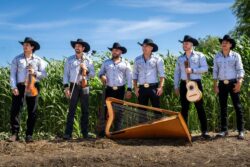
Conjunto de arpa grande, Arpex, posing with their instruments in the midst of a cornfield.
Conjunto de arpa grande, Arpex, posing with their instruments in the midst of a cornfield. Photo: Courtesy of artist.

This work focused on the story of Miguel Prado, a musician from Michoacán, and his group Arpex, a conjunto de arpa grande that began to take shape soon after he arrived in California around 2000. Miguel migrated as a teenager with the dream of dedicating his life to music. Over time, he met other musicians from Michoacán in the Central Valley who shared the same desire to keep their musical tradition alive. Out of that collective effort, Arpex was born, between long workdays, late-night rehearsals, and community celebrations, eventually becoming a leading voice of the arpa grande tradition in the San Joaquin Valley. Through this instrument, emblematic of his hometown of Coalcomán, Michoacán, Miguel has kept alive a musical tradition that travels, adapts, and continues to bring people together across distance.

Miguel Prado playing the harp
Miguel Prado playing his harp in the arpa grande tradition in his home. Photo: Leticia Soto Flores/ACTA.

His story was documented as part of Sounds of California: San Joaquin Valley (2024-2025), an initiative of the Alliance for California Traditional Arts (ACTA) in collaboration with Radio Bilingüe, which, between 2024 and 2025, recorded the voices, songs, and testimonies of migrant artists in the agricultural heart of the state. The project included field recordings at community festivals, in-depth interviews, and the commission of ten original songs, among them Ceros a la izquierda (Zeros on the Left), composed by Miguel Prado. 

In this song, Miguel turns the experience of undocumented migration into poetry and an affirmation of dignity. From its opening lines, the lyrics assert the freedom and pride of those who work with effort and humility. The song exposes inequality and hypocrisy, articulating with sharp insight the contradictions of living within a legal system that protects some while overlooking others: when abuse happens at work, the law goes unseen; when it appears to favor the worker, “in English, something else happens.” With irony and clarity, Miguel evokes the feeling of living within rules that were not designed for those whose work keeps the country moving.

Miguel Prado as a young boy already learning about arpa grande. Photo: Courtesy of artist.

Miguel Prado with his family in Michoacan. Photo: Courtesy of artist.

The song also looks inward, calling for unity and mutual respect within the migrant community itself. In its chorus, “Even if we’re zeros on the left, we can do it!”, Miguel transforms exclusion into collective strength, reminding listeners that even those treated as if they don’t count make everyday life in this country possible. Hearing this song during the conference presentation was deeply moving: a voice that turns migrant experience into shared consciousness, memory, and hope.
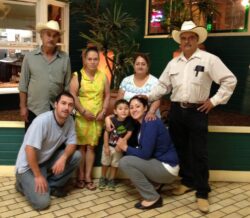
Miguel Prado with his wife, son, and parents. Photo: Courtesy of artist.

The power of the song’s text also inspired Dr. Irina Córdoba Ramírez, researcher at the Institute of Historical Research at UNAM, who discussed it in another academic setting. She revisited Ceros a la izquierda in the panel “The History of the Present and the Present in History,” held on September 24, 2025, at UNAM. That this piece resonated beyond the conference underscores the transnational dimension of this work: the stories documented by ACTA in California converse with reflections in Mexico that seek to understand migration and the ways culture creates bonds between communities through music and memory.

Participating in this international academic gathering offered an opportunity not only to share research outcomes but also to reflect on the deeper purpose of our work at ACTA: accompanying communities so that their cultural practices may be heard, recognized, and valued. In a space devoted to the dialogue between history and displacement, the performance of Miguel Prado and Arpex—and the sound of the arpa grande—reminded us that music can also be a place of truth, belonging, and resilience.
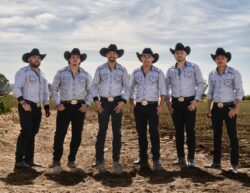
grupo Arpex standing in front of a field with blue cloudy sky above them. There are six members standing and smiling at the camera.
Grupo Arpex in the fields, awaiting to start a community festivity. Photo: Courtesy of artist.

California’s Central Valley, with its diverse soundscape of sones mariacheros, pirekuas purépechas, chilenas oaxaqueñas, and corridos norteños, remains a space where Mexico and California intertwine. The stories of artists like Miguel Prado show that migrant traditions are not relics of the past but living practices that sustain community, memory, and hope.

We invite you to listen to a short preview of the song Ceros a la izquierda, which will be featured on the upcoming album Canciones del San Joaquín—coming very soon!

 

Invest in California’s cultural wealth.

Every gift is a commitment to a culture bearer, and the people of California.

DONATE
Alliance for California Traditional Arts
Privacy Overview

This website uses cookies so that we can provide you with the best user experience possible. Cookie information is stored in your browser and performs functions such as recognising you when you return to our website and helping our team to understand which sections of the website you find most interesting and useful.