Profile
Silvia Santiago Miguel
The tradition of backstrap weaving is very popular in many towns in Oaxaca, Mexico. Practiced and taught through generations of women, weaving on a backstrap loom is used to make shawls, napkins, belts, and other items needed for daily life and traditional clothing. In her hometown of San Juan Mixtepec…
Profile
Ravindra Bharathy Sridharan
The mrudangam is a double-headed drum. It is said to be the “king of percussion” and dates back to 4 or 5 century BCE, with references found in the great Indian epics Ramayana, Mahabharata, and Srimad Bhagavatham. Today it is featured in all South Indian classical music (Carnatic) concerts as…
Profile
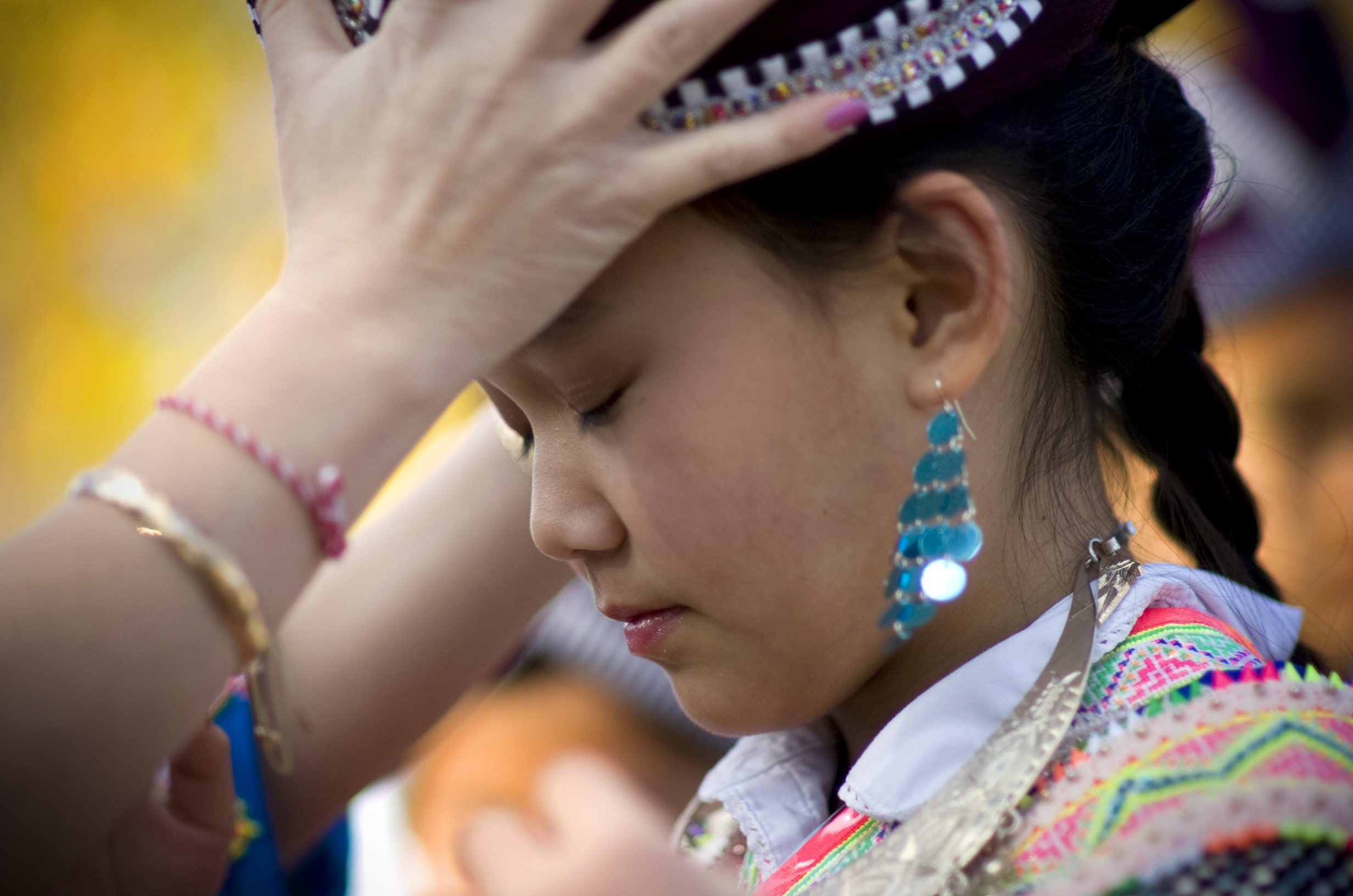
Tou Thao
The qeej (a multiple pipe bamboo mouth organ, pronounced kheng) is the quintessential Hmong instrument. Used in ritual practices, the qeej replicates the tones and vowel sounds of the Hmong language and the qeej player uses his instrument to communicate with the spirit world. Ritual movements accompany the music; your…
Profile
Mariko Watabe
Hayashi is a traditional Japanese percussion ensemble. Originating in Noh theater in the 14th century, hayashi also plays an important part in Kabuki theater. The core hayashi instruments are the kotsuzumi (a shoulder drum that produces low sounds), the okawa (a hand drum that makes very high sounds), and the…
Profile
George Blake
Hoopa and Yurok Traditional Arts
Profile
Jacob Hernandez
Mutiple genres of traditional Mexican music rely on the sounds of stringed instruments, from mariachi’s guitarróns, vihuelas, and guitars, to son jarocho’s jaranas. The quality of music produced is a direct result of the quality of craftsmanship that went into the creation of the instrument, including the mastering of necessary…
Profile
Roman “Ito” Carrillo
Puerto Rican Bomba
Profile
Adama Jewel Jackson
West African Dance is the cultural, social, spiritual, and moral expression of African people. It is how values are expressedfor various life events including birth (naming ceremonies), growth and maturity (rites of passage), love and family (marriage rituals), social events, and death. African dance holds these traditions that are near…
Profile
Alam Khan
Hindustani or North Indian classical music, a tradition that originated in the Vedic ritual chants, has been evolving since the 12th century. The sarod (or sarode) is a 25-stringed fretless instrument, used mainly in Indian classical music. Along with the sitar, it is among the most popular and prominent instruments…
Profile
Masayuki Koga
The skakuhachi is a bamboo flute whose origin is in China but migrated to Japan around the sixth century. It was primarily played by Buddhist monks, who used it as a spiritual medium in order to master breathing techniques. The primary genres of shakuhachi are honkyoku (solo), sonkyoku (ensemble), and…