
Julie Dick-Tex (left) and Mandy Macias (right) share their process for making acorn mush. Photo: Marlena Sloss
Julie Dick-Tex
Western Mono Basketry and Traditional Beading
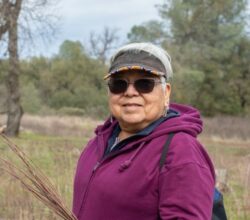
Julie Dick-Tex is Western Mono and a member of the Dunlap Band of Mono Indians located in eastern Fresno County. She is lifelong student of tribal arts and culture and has been a mentor and an apprentice in years past for basketry and traditional beading. She will mentor her eldest daughter, Mandy Macias, in the creation of a traditional yarn and glass beaded belt, a KoiKoi worn at the turn of the century. The traditional art form requires planning, patience, and commitment, and is slowly fading from use within its tribal community.
Apprenticeship Program
2025
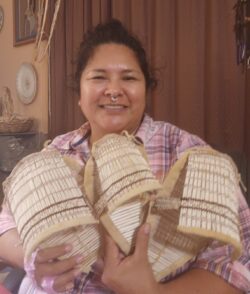
Julie Dick-Tex (Western Mono) will mentor her daughter, Mandy Macias (Western Mono/Mtn. Maidu/Ohlone), in an intergenerational apprenticeship focused on the creation of a KoiKoi belt, a traditional form used in dance, ceremony, and cultural demonstration. Mandy, an apprentice under her mother in the 2016 Apprenticeship Program and a mentor in the 2012 Apprenticeship program, aims to complete a KoiKoi belt for performance use while developing the skills to repair family heirlooms, offer instruction, and document the process in accurate detail. An ambitious goal includes creating a 3–4 foot belt incorporating multiple colors of yarn and beadwork, with Julie providing guidance and determining what is achievable to ensure a successful first-time piece.
2016
Master artist Julie Dick-Tex participated in ACTA’s Apprenticeship Program teaching her daughter Mandy Marine, a master artist herself (Apprenticeship Program 2012), the technical and cultural significance of the Western Mono beaded collars.
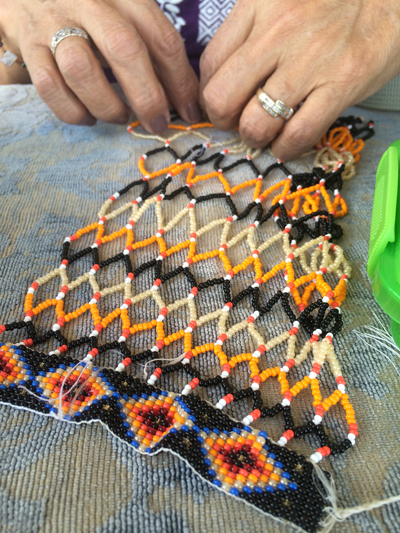
The beaded collar is adornment worn by Western Mono women. The collar is made from contemporary glass beads. It consists of a wide choker neckband, with a net-like or lacy draped cape. The drape of the collar extends fully over and around the shoulders covering the upper torso front and back. The patterns not only differ by bead choices, but also by region. A collar for a woman from a northern Mono band may have large chevron or diamond patterns, while a woman from the southern bands would have a collar with alternating color lines.
Mentor artist Julie Dick-Tex first learned to bead from her mother and watched the elders of her community doing this work, especially her aunt Annie. She first learned by working on a loom which was constructed from a tree branch and using beads from her mother’s collection. Dick-Tex is concerned about bringing more vibrancy to this practice. She shares that there are older photos of collars worn proudly by many women from their community, however, the younger generation has not engaged in this practice of wearing beaded collars, much less making them. Like many Native American tribes, the Western Mono adopted the use of glass and seed beads early on. The beaded collar, as with other beadwork, is an older adopted traditional art that is overshadowed by our basketry. The collar is a part of the traditional ceremonial dress attire and it’s important to Dick-Tex to perpetuate the art form before it is forgotten.
Gallery
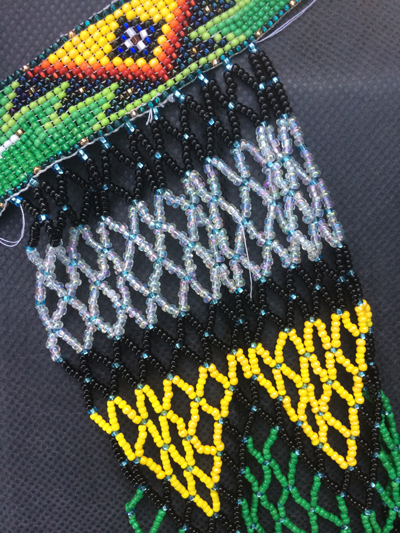
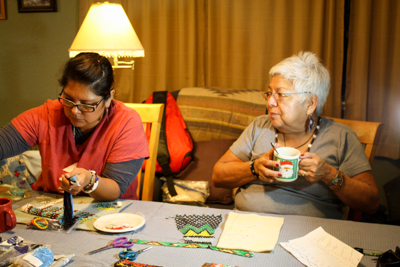
Master artist Julie Dick-Tex watches her daughter/apprentice Mandy Marine as she looks at a variety of beads that she will utilize for her Western Mono beaded collar.
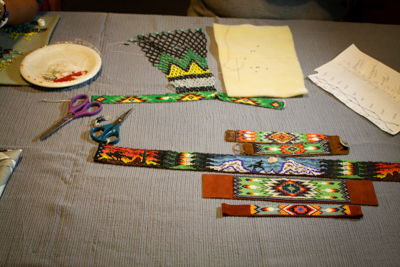
A variety of Western Mono beaded leather bands made by Dale Tex, and the start of a beaded collar made by Julie Dick-Tex.
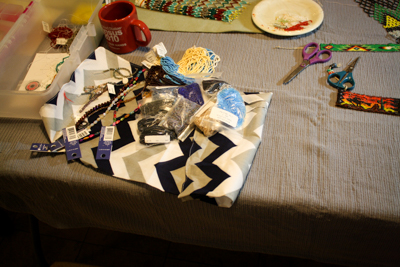
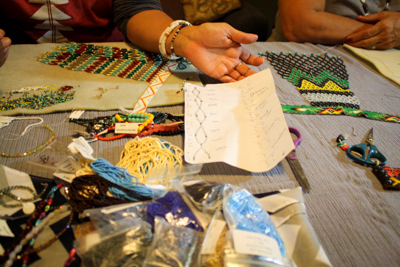
Two Western Mono beaded collars in process, beads and documentation that illustrates the different types of bead strand counts, designs and connections prepared by Mandy Marine.
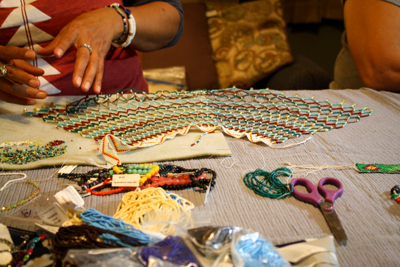
A nearly-completed Western Mono beaded collar constructed by Mandy Marine, apprentice to master artist Julie Dick-Tex.
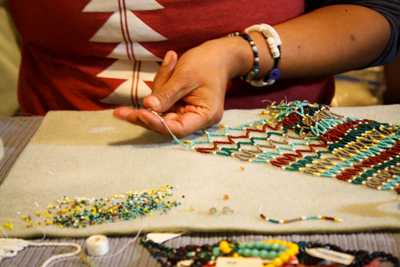
Apprentice, Mandy Marine, of master artist Julie Dick-Tex, begins threading beads to create a strand for the Western Mono beaded collars.
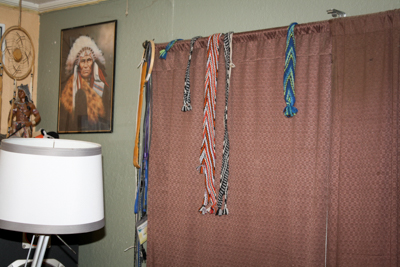
Tumpline woven belts are draped at the home of Julie Dick-Tex.
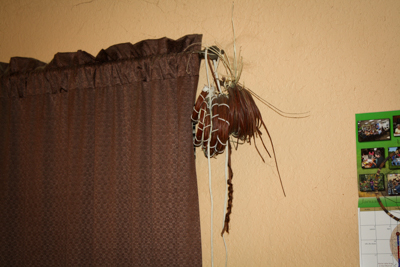
At the home of master artist Julie Dick-Tex a variety of natural materials spread throughout the house for Western Mono basketry.
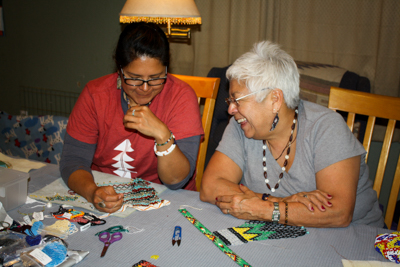
Master artist Julie Dick-Tex enjoys her time with her daughter/apprentice Mandy Marine as they work on their respective Western Mono beaded collars.
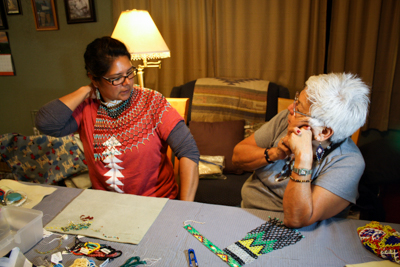
Master artist Julie Dick-Tex admires how her apprentice, Mandy Marine's Western Mono beaded collar is developing.
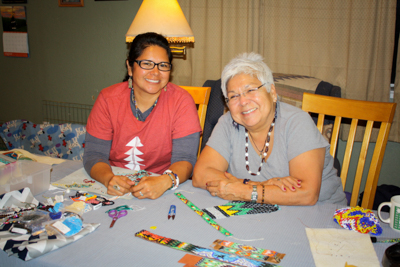
Master artist Julie Dick-Tex and daughter/apprentice Mandy Marine studying the art of Western Mono beaded collars.
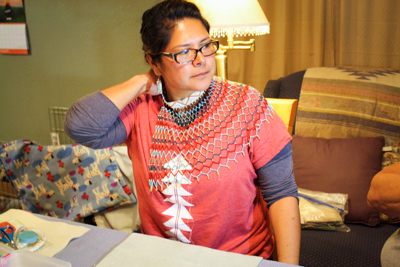
Apprentice, Mandy Marine, of master artist Julie Dick-Tex, demonstrates how her unfinished Western Mono beaded collar fits and blends with other colors.